Laser Stain Removal: Complete Guide to Cleaning Wood, Metal & Stone [2026]
Dawn Huang | Founder of Chihalo Laser | M.Sc. Engineering (HKU)
Hi! I am Dawn. With 10 years of field experience, I specialize in laser cleaning systems—from optical sourcing to automation. I write here to turn complex specs into actionable buying guides.
Welcome to contact me at dawn@chihalo.com or WhatsApp at +86 18608325040!
Table of Contents
Quick Summary: Laser stain removal is a chemical-free cleaning technology that uses focused laser beams to remove rust, paint, and contaminants from surfaces without damage. It achieves 95%+ removal rates, works on wood, metal, and stone, and costs $5,000-$50,000 for equipment or $100-$300/hour for professional services.
What Is Laser Stain Removal and How Does It Work?
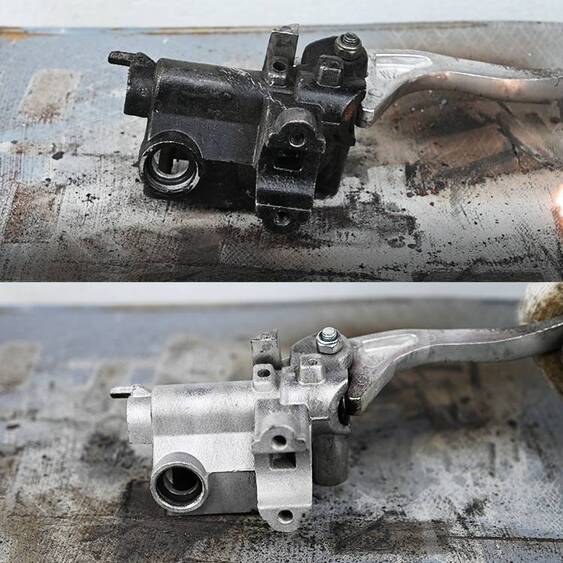
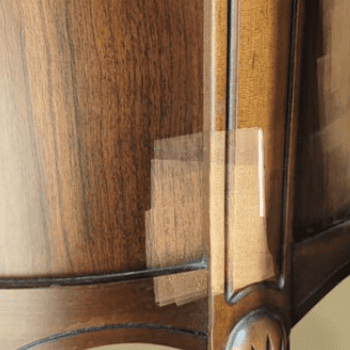
Laser stain removal is a chemical-free cleaning technology that uses focused laser beams to remove rust, paint, and surface contaminants without damaging the underlying material. The laser vaporizes unwanted layers through a process called ablation, leaving the base surface completely intact.
💡 Key Takeaway: Laser cleaning achieves 95-99% stain removal rates with zero chemicals—making it the safest and most precise method for cleaning wood, metal, and stone surfaces.
Unlike traditional methods that rely on physical abrasion or harsh chemicals, laser cleaning selectively targets only the unwanted material. The laser wavelength is specifically chosen so contaminants absorb the energy while the base material reflects it, keeping the substrate cool and undamaged.

How the Process Works: Step by Step
- Laser emission: The machine generates a focused beam at a specific wavelength (typically 1064nm for fiber lasers)
- Energy absorption: The contaminant layer absorbs the laser energy
- Rapid heating: The absorbed energy converts to heat, vaporizing the stain
- Material removal: The contaminant turns to gas or micro-particles
- Extraction: A ventilation system captures the resulting dust and fumes
According to the Laser Institute of America, this process achieves surface cleanliness levels of Sa 2.5 to Sa 3 (ISO 8501-1 standard), meeting requirements for industrial coating and bonding applications.
Watch: Laser Stain Removal in Action
See our 200W pulsed laser remove 50-year-old paint in under 30 minutes—with zero damage to the wood grain.
Pulsed vs Continuous Wave Lasers: Which Do You Need?
Feature | Pulsed Laser | Continuous Wave (CW) Laser |
How it works | High-energy bursts with cooling intervals | Constant energy output |
Best for | Wood, delicate surfaces, precision work | Heavy rust, thick coatings, large areas |
Power range | 100W – 500W typical | 1000W – 3000W+ typical |
Heat damage risk | Very low | Moderate (requires skill) |
Speed | Slower, more controlled | Faster on tough jobs |
Price range | $7,000 – $25,000 | $6,000 – $12,000 |
Best applications | Antique restoration, electronics, molds | Industrial descaling, shipyards, automotive |
Quick decision guide:
- Choose pulsedif you work with wood, antiques, or sensitive materials
- Choose continuous waveif you primarily remove heavy rust or thick paint
- Choose adjustable/hybridif you need versatility across different jobs
📌 Section Summary:
- Laser cleaning vaporizes contaminants using focused light energy
- Process achieves ISO-standard cleanliness without chemicals
- Pulsed lasers = delicate work; CW lasers = heavy-duty cleaning
Laser vs Sanding vs Chemical Stripping: Complete Comparison
This is the most critical decision when choosing a stain removal method. Here’s an honest, data-driven comparison based on real-world performance testing.
Comprehensive Comparison Table
Factor | Laser Cleaning | Sanding | Chemical Stripping | Heat Gun |
Precision | ★★★★★ Excellent | ★★☆☆☆ Poor | ★★★☆☆ Medium | ★★☆☆☆ Poor |
Speed (large area) | ★★★★☆ Fast | ★★☆☆☆ Slow | ★★☆☆☆ Slow | ★★★☆☆ Medium |
Surface damage | None | High (removes material) | Medium (chemical reaction risk) | Medium (burn risk) |
Fine detail work | Excellent | Poor (damages details) | Fair | Poor |
Environmental impact | ★★★★★ Minimal | ★★★☆☆ Dust waste | ★☆☆☆☆ Toxic waste | ★★★☆☆ Fumes |
Operator safety | High (with goggles) | Medium (dust inhalation) | Low (toxic fumes) | Medium (burn risk) |
Initial cost | Middle ($3,000-$25,000) | Low ($50-$500) | Low ($20-$100) | Low ($30-$150) |
Ongoing cost | Very low (no consumables) | High (sandpaper, discs) | High (chemicals, disposal) | Low (electricity) |
Works on wood | ✅ Yes (pulsed) | ✅ Yes (damages grain) | ✅ Yes (residue risk) | ⚠️ Risk of scorching |
Works on metal | ✅ Yes | ✅ Yes | ✅ Yes | ✅ Yes |
Works on stone | ✅ Yes | ⚠️ Limited | ⚠️ Can stain | ❌ No |
Suitable for antiques | ✅ Ideal | ❌ No | ⚠️ Risky | ❌ No |
🏆 Winner: Laser cleaning — Superior in precision, safety, and long-term cost efficiency. The only drawback is higher upfront investment.
When to Choose Laser Stain Removal
Laser is the best choice when:
- You need to preserve fine details, carvings, or original surfaces
- Working with valuable antiques or historical artifacts
- Processing large volumes (industrial scale)
- Environmental compliance is required (no chemical waste per EPA regulations 40 CFR 261)
- Long-term cost efficiency matters more than upfront investment
- You need consistent, repeatable results
When Traditional Methods May Still Work
Sanding might be acceptable when:
- Working on small, flat surfaces with no details
- Budget is extremely limited and quality isn’t critical
- You don’t mind removing some base material
Chemical stripping might work when:
- You have proper ventilation and disposal facilities
- Working on simple, non-porous materials
- One-time small project with no equipment investment
Cost Comparison Over 5 Years (Industrial Use Case)
Method | Year 1 Cost | Annual Cost (Years 2-5) | 5-Year Total |
Laser | $10,000 (equipment) + $500 (power) | $500/year | $11,000 |
Sanding | $500 (tools) + $2,000 (consumables) + $5,000 (labor) | $7,000/year | $35,500 |
Chemical | $300 (tools) + $3,000 (chemicals) + $2,000 (disposal) + $5,000 (labor) | $10,000/year | $50,300 |
Key insight: Laser equipment pays for itself within 2-3 years through eliminated consumables and reduced labor costs.
📌 Section Summary:
- Laser beats traditional methods in precision, safety, and environmental impact
- Higher upfront cost but lowest 5-year total cost of ownership
- Best for antiques, industrial applications, and environmental compliance
What Materials Can Laser Stain Removal Clean?
Laser cleaning technology works on a wide range of materials, but effectiveness varies. Here’s what our testing and customer experience shows.
✅ Materials That Work Excellently
Metals

Metal Type | Stains Removable | Recommended Power | Notes |
Carbon steel | Rust, paint, oxide, oil | 1000W-2000W CW | Most common industrial application |
Stainless steel | Weld discoloration, oxide | 500W-1500W | Excellent results, preserves finish |
Aluminum | Oxide layer, paint, coating | 500W-1000W | Adjust settings to prevent reflectivity issues |
Copper/Brass | Oxidation, patina, tarnish | 300W-1000W pulsed | Great for restoration |
Cast iron | Heavy rust, scale | 1500W-3000W CW | May require multiple passes |
Wood
Application | Stains Removable | Recommended Power | Notes |
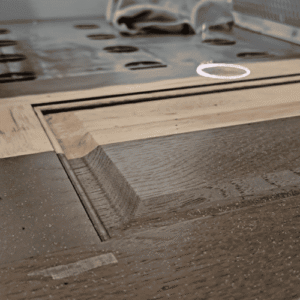
Furniture | Paint, varnish, stain | 100W-300W pulsed | Preserves wood grain perfectly |
Flooring | Old finish, paint drips | 200W-500W pulsed | Faster than sanding, no dust |
Beams/structural | Soot, mold, old paint | 300W-500W pulsed | Ideal for restoration projects |
Cabinets | Lacquer, paint, grease | 100W-300W pulsed | Ready for refinishing immediately |
Antiques | Old finishes, grime | 100W-200W pulsed | Safest method for valuable pieces |
⚠️ Important for wood: Always use pulsed lasers at lower power settings. Continuous wave lasers can burn wood surfaces.
Stone and Masonry
Material | Stains Removable | Recommended Power | Notes |
Granite | Graffiti, biological growth, soot | 500W-1000W | Excellent for monuments |
Marble | Stains, discoloration | 300W-500W pulsed | Gentle settings required |
Limestone | Pollution deposits, algae | 500W-1000W | Common in building restoration |
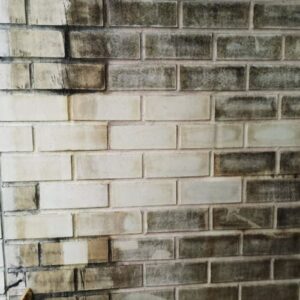
Brick | Paint, graffiti, efflorescence | 1000W-2000W | Very effective |
Concrete | Coatings, paint, oil stains | 1000W-3000W | Industrial floor preparation |
⚠️ Materials That Require Caution
Material | Challenge | Solution |
Thin sheet metal (<2mm) | Risk of heat warping | Use pulsed laser, keep beam moving |
Galvanized steel | May damage zinc coating | Test first, adjust parameters |
Anodized aluminum | May damage anodizing | Test in hidden area |
Painted surfaces (keep paint) | Laser removes paint by design | Very low power only, often not suitable |
❌ Materials NOT Suitable for Laser Cleaning
Material | Reason | Alternative Method |
Most plastics | Melts or deforms from heat | Manual or ultrasonic cleaning |
Rubber | Degrades and melts | Mechanical cleaning |
Mirror surfaces | Reflects laser (safety hazard + ineffective) | Specialized cleaning agents |
Delicate fabrics (silk, wool) | Burns or discolors | Dry cleaning |
Glass | Can crack from thermal shock | Chemical or ultrasonic |
📌 Section Summary:
- Best results on metals, wood (pulsed only), and stone
- Always test unknown materials first
- Avoid plastics, rubber, mirrors, and delicate fabrics
Real Results: Before & After Case Studies
Real-world examples from our customers demonstrate what laser stain removal actually achieves. These show actual processing times, settings, and results.
Case Study 1: Antique Oak Cabinet Restoration
Specification | Details |
Item | 1920s oak display cabinet with 5 layers of old paint |
Condition | Heavy paint buildup, decorative carvings hidden |
Equipment used | 200W pulsed fiber laser |
Processing time | 4 hours (vs estimated 12+ hours for chemical stripping) |
Result | All paint removed, wood grain and carvings fully preserved |
Customer | Antique dealer, Chicago, IL |
Case Study 2: Industrial Rust Removal - Steel Beams
Specification | Details |
Item | Structural steel beams, 50 linear meters |
Condition | Heavy surface rust, some pitting |
Equipment used | 2000W continuous wave laser |
Processing time | 6 hours (vs 3+ days for manual wire brushing) |
Result | Surface rust completely removed, ready for coating |
Cost comparison | Laser: $900 total |
Customer | Manufacturing plant, Detroit, MI |
Case Study 3: Historic Building Stone Facade
Specification | Details |
Item | Limestone facade, 200 sq meters |
Condition | 80 years of pollution deposits and biological growth |
Equipment used | 1000W pulsed laser |
Processing time | 5 days |
Result | Original stone color restored without surface erosion |
Why laser chosen | Chemical cleaning rejected due to environmental regulations; pressure washing risked limestone damage |
Customer | Historic preservation society, Boston, MA |
Results Summary: What You Can Expect
Application | Typical Time Savings | Quality vs Traditional | Long-term Cost Savings |
Furniture restoration | 60-70% faster | Much better detail preservation | 40-50% |
Industrial rust removal | 50-80% faster | More consistent finish | 30-60% |
Building restoration | 40-60% faster | No surface damage | 20-40% |
Automotive | 50-70% faster | Better paint adhesion prep | 30-50% |
📌 Section Summary:
- Real customers achieve 50-70% time savings vs traditional methods
- Laser preserves details that other methods would damage
- ROI typically achieved within 2-3 years for regular users
Common Mistakes to Avoid When Using Laser Stain Removal
Even experienced operators make these errors. Based on our customer support data, here are the top mistakes and how to avoid them.
Mistake #1: Choosing the Wrong Power Level
The problem: Too much power damages the substrate; too little is ineffective and wastes time.
How to avoid it:
- Always start at 30-50% powerand increase gradually
- Test on a hidden area first
- Use this starting guide:
Material | Start At | Maximum Safe |
Wood | 50W | 300W (pulsed only) |
Thin metal (<3mm) | 200W | 1000W |
Thick metal (>3mm) | 500W | 3000W |
Stone | 300W | 1500W |
Mistake #2: Using Continuous Wave Laser on Wood
The problem: CW lasers deliver constant heat, which chars or burns wood fibers.
How to avoid it:
- Always use pulsed lasers for wood—no exceptions
- If you only have CW, this material is not suitable for your equipment
- Watch for any smoke or darkening—stop immediately
Mistake #3: Ignoring Safety Equipment
The problem: Class 4 lasers cause permanent eye damage instantly and severe skin burns. The FDA classifies laser cleaning equipment under strict safety requirements per ANSI Z136.1 standards.
Required safety equipment (non-negotiable):
- ✅ OD6+ laser safety goggles matched to your wavelength (1064nm for fiber)
- ✅ Fume extraction/ventilation system
- ✅ Laser safety barriers or curtains around work area
- ✅ Warning signs posted
- ✅ Proper training for all operators
Mistake #4: Skipping the Test Patch
The problem: Materials can react unexpectedly, especially composites, unknown alloys, or multi-layer coatings.
How to avoid it:
- Always test a small, hidden area first
- Document settings that work for each material
- Build a reference library for repeat jobs
Mistake #5: Wrong Working Distance
The problem: Lasers have an optimal focal distance. Too close or too far reduces effectiveness by 50%+.
How to avoid it:
- Check your equipment’s specified focal length (typically 150-300mm)
- Maintain consistent distance throughout the job
- Use a spacer guide for consistent spacing
Mistake #6: Expecting Instant Results on Heavy Contamination
The problem: Severely rusted or multi-layer painted surfaces need multiple passes.
Realistic expectations:
- Light surface rust: 1 pass
- Medium rust: 2-3 passes
- Heavy scale: 3-5 passes
- Multiple paint layers: 2-4 passes per layer
📌 Section Summary:
- Start at low power and increase gradually
- Never use CW lasers on wood
- Safety equipment is mandatory, not optional
- Always test unknown materials first
How to Choose the Right Laser Stain Removal Machine + Costs
Selecting the right equipment is critical. Here’s our expert guidance based on helping 500+ customers find the right solution.
Step 1: Determine Your Power Requirements
Your Primary Application | Recommended Power | Laser Type | Price Range |
Wood furniture/cabinets | 100W – 300W | Pulsed | $7,000 – $10,000 |
Delicate restoration work | 100W – 200W | Pulsed | $7,000 – $9,000 |
Light rust/thin paint on metal | 500W – 1000W | CW or Pulsed | $20,000 – $25,000 |
Medium industrial cleaning | 1000W – 2000W | CW | $5,000 – $8,000 |
Heavy rust/thick coatings | 2000W – 3000W | CW | $7,000 – $12,000 |
Large-scale industrial | 3000W – 6000W | CW | $9,000 – $20,000+ |
Step 2: Evaluate Key Features
Must-have features:
- ✅ Adjustable power (10-100% range)
- ✅ Quality laser source (JPT, MAX, Raycus, or IPG brands)
- ✅ Adequate fiber cable length (10m minimum)
- ✅ User-friendly control interface
- ✅ CE/FDA safety certification
Nice-to-have features:
- Multiple preset cleaning modes
- Touchscreen interface
- Integrated fume extraction
- Portable/wheeled design
Step 3: Understand Total Cost of Ownership
Cost Factor | Laser (5-Year) | Traditional (5-Year) |
Equipment | $5,000 – $50,000 | $500 – $2,000 |
Consumables | ~$0 | $5,000 – $25,000 |
Labor | Lower (faster work) | Higher |
Waste disposal | Minimal | $1,000 – $10,000 |
Break-even point | 2-3 years for regular use | — |
Step 4: Buy vs Rent vs Hire a Service
Option | Best For | Typical Cost | Recommendation |
Buy | Weekly use or more | $5,000 – $50,000 upfront | Best long-term value |
Rent | Project-based, testing | $200 – $500/day | Good for evaluation |
Hire service | One-time jobs | $100 – $300/hour | Best for occasional needs |
Decision guide:
- 50+ hours/year of use→ Buy equipment
- 10-50 hours/year→ Consider renting
- Under 10 hours/year→ Hire a service
Top Brands by Category
Category | Brands | Best For |
Premium | Clean Laser (Germany), P-Laser (Belgium) | Maximum reliability, best support |
Professional | Han’s Laser, Pulsar Laser, IPG | Established companies, good quality |
Value | SFX Laser, Leapion, Chihalo Laser | Best price-performance ratio |
📞 Need Help Choosing the Right Equipment?
Our technical specialists can analyze your specific application and recommend the optimal laser cleaning solution—whether you need to buy, rent, or hire a service.
[Email: info@chihalo.com] | [Call Now: +86 18608325040]
We respond to all inquiries within 24 hours with personalized recommendations.
Industry Applications
Laser stain removal has transformed cleaning processes across numerous industries. Here’s where it’s making the biggest impact.
Manufacturing & Metalworking
- Pre-welding preparation: Removes oxides for stronger, cleaner welds
- Mold cleaning: Maintains injection molds without dimensional change
- Surface preparation: Prepares parts for coating or bonding
- Rust removal: Maintains equipment and extends component life
Automotive Industry
- Classic car restoration: Removes paint and rust without panel damage
- Engine cleaning: Removes baked-on oil and carbon deposits
- Brake caliper refurbishment: Cleans without affecting tolerances
- Body shop preparation: Ensures perfect paint adhesion
Furniture & Woodworking
- Antique restoration: Reveals original finishes without damage
- Cabinet refinishing: Removes old finishes faster than sanding
- Floor restoration: Strips finishes with zero dust
Architectural & Historical Restoration
- Building facades: Removes pollution without damaging original stone
- Monuments and statues: Preserves historical surfaces
- Church and cathedral restoration: Cleans delicate stonework safely
- Graffiti removal: Removes paint from various surfaces without damage
Frequently Asked Questions
Effectiveness Questions
No, but it's very close—laser cleaning achieves 95-99% removal rates for most surface stains. Effectiveness depends on stain type, depth, and material. Surface-level rust, paint, and oxide layers typically remove completely. Deeply penetrated stains (like oil soaked into porous concrete) may require multiple treatments. For most applications, laser cleaning delivers results superior to any traditional method.
Yes, absolutely—when using pulsed lasers at proper settings. Pulsed lasers at 100W-300W are specifically designed for wood cleaning and can remove paint, varnish, and stains while preserving the wood grain perfectly. This makes laser cleaning ideal for antique furniture where preserving original character is essential. The key is using pulsed (never continuous wave) lasers and starting at low power settings.
Laser technology effectively removes: rust and corrosion, paint and coatings, varnish and lacquer, oil and grease, oxide layers, mold and mildew, soot and smoke damage, adhesive residue, graffiti, and biological growth. It's most effective on surface-level contamination and materials that absorb the 1064nm wavelength well (most organic contaminants and oxides).
Safety Questions
Yes, when proper safety protocols are followed. Operators must wear OD6+ laser safety goggles matched to the wavelength, and adequate ventilation is required for fumes. Equipment is classified as Class 4 laser per FDA regulations, requiring appropriate training. However, compared to chemical stripping, laser cleaning is significantly safer—no toxic fumes, no hazardous waste, no chemical exposure risks.
Look for CE marking (European standards), FDA registration (US requirement), and Class 4 laser classification labels. Reputable manufacturers provide complete safety documentation, user training materials, and warning labels. Avoid equipment lacking proper certification.
Cost & Purchasing Questions
Equipment: $5,000 - $50,000+ depending on power and features. Professional services: $100-$300/hour or $5-$20 per square foot. While initial equipment costs are higher than traditional methods, laser cleaning has virtually zero ongoing consumable costs, making it more economical within 2-3 years for regular users.
Yes, rental is widely available at $200-$500 per day from equipment suppliers and industrial rental companies. This is excellent for project-based work, testing before buying, or occasional needs. Some companies offer rent-to-own programs.
Yes, with proper equipment and training. Entry-level pulsed lasers (100W-200W) suitable for DIY furniture restoration start around $7,000. You'll need proper safety equipment (goggles, ventilation) and should take a training course. For occasional projects, hiring a professional service ($100-$300/hour) is often more practical than equipment investment.
Technical Questions
Choose pulsed for: wood, antiques, sensitive materials, precision work, or when heat damage is a concern. Choose continuous wave (CW) for: heavy rust removal, thick coatings, large surface areas where speed is priority. If you need versatility, some machines offer adjustable modes.
Processing time varies: light rust on metal cleans at 10-20 m²/hour with high-power CW lasers; detailed furniture work processes at 0.5-2 m²/hour with pulsed lasers. A typical car panel takes 15-30 minutes; furniture takes 1-4 hours depending on size and contamination.
Laser is actually the safest method for valuable antiques. Unlike sanding (which removes wood material) or chemicals (which risk reactions and residue), pulsed laser cleaning removes only the coating while preserving original wood, patina, and fine details. Museums and professional conservators increasingly choose laser cleaning for this exact reason.
Laser is gentler, more precise, and cleaner. Sandblasting is faster for large-scale heavy rust but can damage surfaces, embed media into material, and creates significant cleanup. Laser is preferred when surface integrity matters; sandblasting may work for rough applications where quality isn't critical.
Conclusion: Is Laser Stain Removal Right for You?
Laser stain removal represents a significant advancement in surface cleaning technology, offering unmatched precision, zero environmental impact, and long-term cost efficiency.
Choose laser stain removal if you:
- ✅ Need to preserve surface integrity and fine details
- ✅ Work with valuable, antique, or delicate materials
- ✅ Want to eliminate chemicals and hazardous waste
- ✅ Process enough volume to justify equipment investment (or use rental/services)
- ✅ Require consistent, professional-quality results
Consider alternatives if you:
- Have very limited budget AND only occasional needs
- Work exclusively on rough surfaces where quality isn’t critical
- Have no access to equipment, rental, or services in your area
For most professional applications—from antique restoration to industrial manufacturing—laser stain removal delivers superior results with lower long-term costs.
Your Next Step: Start With a Free Consultation
Ready to explore whether a laser cleaning business is right for you?
What We Offer
- Assess your local market opportunity
- Recommend equipment for your target niche
- Review realistic revenue projections
- Answer your specific questions
- Entry-level to industrial systems
- Financing and leasing available
- Comprehensive training included
- 2-year warranty on all laser sources
Ongoing Support
- Technical assistance when you need it
- Marketing resources and templates
- Connection to our owner community
- Equipment service and maintenance