Precision Laser Cleaning
Dawn Huang | Founder of Chihalo Laser | M.Sc. Engineering (HKU)
Hi! I am Dawn. With 10 years of field experience, I specialize in laser cleaning systems—from optical sourcing to automation. I write here to turn complex specs into actionable buying guides.
Welcome to contact me at dawn@chihalo.com or WhatsApp at +86 18608325040!
Table of Contents
What Is Precision Laser Cleaning?
If you’ve ever struggled with rust removal, paint stripping, or surface preparation, you know how frustrating traditional methods can be. Sandblasting kicks up clouds of dust. Chemical strippers create hazardous waste. And manual scraping? That takes forever.
Precision laser cleaning offers a different approach. It uses focused light energy to remove unwanted materials from surfaces—rust, paint, oil, oxides, you name it—without touching the base material underneath. No chemicals. No abrasives. No mess.
The technology has been around since the 1990s, but recent advances in fiber laser technology have made it practical for everyday industrial use. According to a 2023 report by Grand View Research, the global laser cleaning market reached $589 million and is growing at roughly 4% annually as more manufacturers discover its benefits.
Here’s the basic idea: when a laser beam hits a contaminated surface, the contaminant absorbs the energy and essentially vaporizes. The base metal (or stone, or whatever you’re cleaning) reflects most of the energy and stays intact. It’s surprisingly precise—we’re talking accuracy measured in microns.
Need help choosing a laser cleaning solution? Our engineers can evaluate your specific application and recommend the right approach—whether that’s purchasing equipment or using our cleaning services. Request a free consultation →
Why More Manufacturers Are Switching to Laser Cleaning
I’ve worked with laser cleaning technology for over a decade, and the question I hear most often is: “Why should I change what’s already working?” Fair question. Here’s what typically drives the switch:
It Won't Damage Your Parts
This is the big one for precision manufacturers. Unlike sandblasting, there’s no physical contact with the surface. We’ve tested this extensively on aerospace-grade aluminum and titanium alloys—surface roughness changes by less than 0.1 microns. For reference, a human hair is about 70 microns thick. The laser removes what you want gone and leaves everything else alone.
No More Chemical Headaches
Environmental regulations keep getting stricter. If you’re using chemical strippers, you’re dealing with hazardous material handling, special storage requirements, wastewater treatment, and disposal costs that seem to climb every year. Laser cleaning eliminates all of that. The only byproduct is a small amount of dust that’s easily captured with a standard extraction system.
Speed That Actually Makes a Difference
Industry benchmarks from the Laser Institute of America show laser cleaning running 10-25 times faster than manual methods, depending on the application. A 1000W system can clean roughly 15 square meters per hour of medium rust. That’s not marketing fluff—we’ve verified these numbers across dozens of real-world installations.
Your Workers Will Thank You
Sandblasting is loud—we’re talking 100+ decibels. Chemical cleaning requires respirators and protective suits. Laser cleaning? It’s relatively quiet, produces no hazardous fumes (with proper extraction), and operators can work without heavy PPE. We’ve seen noticeable improvements in worker satisfaction at facilities that made the switch.
Lower Long-Term Costs (Once You Get Past the Sticker Shock)
Let’s be honest: laser cleaning equipment isn’t cheap upfront. But here’s what most people don’t realize—there are virtually no consumables. No sand, no chemicals, no blast media to buy and dispose of. Modern fiber lasers run for 100,000+ hours before needing major service. When you calculate total cost of ownership over 5-7 years, laser cleaning typically comes out ahead for operations with regular cleaning needs.
Plays Nice with Automation
If you’re moving toward Industry 4.0 or just want to reduce manual labor, laser cleaning integrates beautifully with robotic systems. The beam delivers through a fiber optic cable, so you can mount the cleaning head on a robot arm and program complex cleaning paths. Add a vision system and you’ve got adaptive cleaning that adjusts to part variations automatically.
Quick Comparison: What You Gain vs. What You Give Up
Advantages | Trade-offs to Consider |
Zero consumable costs after purchase | Higher upfront investment |
No surface damage on proper settings | Requires operator training |
Environmentally compliant | Not ideal for every contaminant type |
Minimal maintenance requirements | Laser safety protocols required |
Highly automatable | May need fume extraction upgrades |
Where Laser Cleaning Makes the Most Sense
Laser cleaning isn’t the right answer for every situation. But for certain applications, it’s become the clear choice. Here’s where we see it delivering the most value:
Aerospace: When "Good Enough" Isn't Good Enough
Aircraft components have zero tolerance for contamination or surface damage. Laser cleaning has become standard practice for turbine blade maintenance, composite bonding preparation, and selective paint removal. The precision matters here—you can strip coating from specific areas while leaving adjacent surfaces untouched.
Real Example: A European MRO facility we worked with switched their turbine blade cleaning from chemical stripping to laser. Processing time dropped from 4 hours to 45 minutes per blade. More importantly, blade rejection rates fell by 30% because the laser process was more consistent and didn’t risk the substrate damage that occasionally occurred with chemical methods.

Automotive & EV Manufacturing: Welding Prep at Scale
Electric vehicle battery production has driven massive adoption of laser cleaning. Before welding aluminum battery tabs, you need to remove the oxide layer—but traditional methods leave residues that contaminate the weld. Laser cleaning became the go-to solution because it leaves surfaces genuinely clean, not just “clean enough.”
Real Example: An EV battery manufacturer in Asia integrated laser cleaning into their module assembly line. Weld porosity defects dropped from 8% to under 2%. The system paid for itself in seven months through reduced scrap and rework.
Mold & Tool Maintenance: Cleaning Without Disassembly
Here’s where laser cleaning really shines. Traditional mold cleaning often means pulling the mold from the press, disassembling it, cleaning each component, and reassembling. With a portable laser system, technicians can clean molds in-place, in-press, during scheduled downtime.
Real Example: A tire manufacturer reduced their mold cleaning time from a full 8-hour shift to under an hour. Annual savings exceeded $180,000 in labor costs alone, not counting the production gains from reduced downtime.
Heritage Conservation: Gentle Enough for Priceless Artifacts
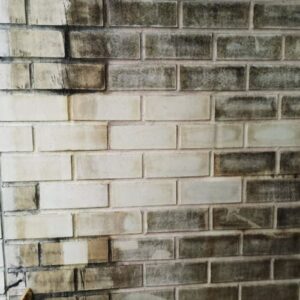
Museums and conservation labs have embraced laser cleaning for restoration work. The ability to remove centuries of grime while preserving original patina—and doing it one microscopic layer at a time—makes it invaluable for irreplaceable objects. The Smithsonian, British Museum, and countless others now use laser cleaning as a primary conservation tool.
Other Industries Worth Mentioning
Shipbuilding: Hull maintenance and coating prep, especially in dry dock operations where environmental controls are difficult
Electronics: PCB preparation, connector cleaning, and semiconductor processing where particle contamination is critical
Nuclear: Surface decontamination—laser cleaning minimizes secondary waste, which is a huge deal when that waste is radioactive
Rail: Wheel and track maintenance, removing built-up contamination that affects braking performance
How Laser Cleaning Stacks Up Against the Alternatives
Every cleaning method has its place. Here’s an honest comparison to help you figure out where laser cleaning fits—or doesn’t fit—your needs:
Versus Sandblasting
Sandblasting remains the workhorse for heavy-duty rust and paint removal on robust steel structures. It’s cheaper upfront and handles thick scale well. But it’s messy, loud, and can damage softer materials or thin substrates. If you’re cleaning heavy structural steel outdoors, sandblasting might still make sense. For anything requiring precision or indoor operation, laser cleaning wins.
Versus Chemical Cleaning
Chemical methods excel at cleaning complex internal geometries—pipes, tubes, and passages where a laser beam simply can’t reach. They’re also effective for certain organic contaminants. But the regulatory burden keeps increasing. A plant manager recently told me his chemical waste disposal costs tripled over five years. For accessible surfaces, laser cleaning eliminates those headaches entirely.
Versus Dry Ice Blasting
Dry ice blasting is cleaner than sandblasting—the media sublimates, leaving no residue. But you’re constantly buying dry ice (it can’t be reused), and it’s incredibly loud. The precision doesn’t match laser cleaning either. For food processing or electrical equipment where you can’t have liquid or residue, dry ice has its niche. But for pure cleaning performance and operating costs, laser comes out ahead.
Side-by-Side Comparison
Factor | Laser | Sandblast | Chemical | Dry Ice |
Surface damage risk | Minimal | High | Medium | Low |
Precision | Excellent | Poor | Poor | Fair |
Environmental impact | Low | High | High | Medium |
Consumables cost/year | ~$0 | $5-15K | $10-20K | $20-40K |
Noise level | 60-70 dB | 100+ dB | Low | 100+ dB |
Automation ease | Excellent | Difficult | Limited | Fair |
Equipment cost | $20-200K+ | $5-30K | $2-15K | $10-50K |
5-year total cost* | Lowest | High | High | Highest |
*Based on 2,000+ operating hours annually. Your numbers may vary—we’re happy to help you calculate specifics for your situation.
The Technology Behind Laser Cleaning
You don’t need a physics degree to use laser cleaning equipment, but understanding the basics helps you get better results and troubleshoot issues. Here’s a simplified explanation:
Why Contaminants Come Off (and Your Parts Don't)
Different materials absorb laser energy differently. Rust, paint, and oil absorb a lot of energy at the wavelengths industrial lasers use (typically 1064nm for fiber lasers). Metals like steel and aluminum absorb much less—they’re more reflective. So when the laser hits a rusty surface, the rust absorbs enough energy to vaporize while the underlying steel barely warms up. This difference in absorption is what makes selective cleaning possible.
Pulsed Lasers vs. Continuous Wave: Which Do You Need?
This is probably the most important decision when selecting equipment:
Pulsed lasers fire in extremely short bursts—nanoseconds or microseconds. Each pulse delivers concentrated energy that vaporizes contaminants before heat can spread into the substrate. They’re ideal for thin oxides, precision parts, and heat-sensitive materials. Think aerospace components, electronics, and fine detail work.
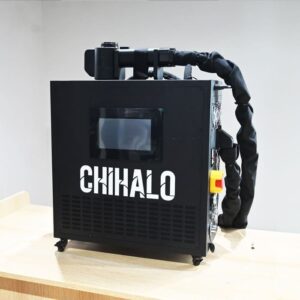
Continuous wave (CW) lasers deliver steady energy output. They’re faster for heavy contamination—thick rust, multiple paint layers, heavy scale. But they generate more heat in the substrate, so they’re better suited for robust materials like steel and iron. Think shipyard work, structural steel, and industrial equipment maintenance.
Parameters That Matter
When you’re dialing in a laser cleaning process, these are the variables you’ll adjust:
Parameter | What It Does |
Power | Higher power = faster cleaning and ability to remove thicker contamination |
Frequency | Higher frequency = more pulses per second = faster coverage but less energy per pulse |
Scan speed | Slower = more energy delivered per area = more aggressive cleaning |
Focus distance | Affects spot size and energy density—critical for consistent results |
Most modern systems come with pre-programmed settings for common applications, so you’re not starting from scratch. But understanding these basics helps when you need to optimize for unusual materials or contamination types.
Choosing the Right Equipment (Or Deciding to Hire Services)
The laser cleaning market has exploded with options in recent years. Here’s how to navigate the choices:
Decision Guide: What Power Level Do You Actually Need?
Application Type | Recommended | Power Range |
Light oxide, thin coatings | Pulsed | 50-100W |
General rust, paint, prep work | Pulsed or CW | 200-500W |
Heavy rust, thick coatings, high volume | CW | 1000-2000W |
Industrial scale, production lines | CW + Automation | 1500-3000W |
Buy vs. Hire: A Practical Framework
Consider purchasing if you have:
- Regular cleaning needs (weekly or more frequent)
- Enough volume to justify the capital investment
- Staff available for training and operation
- Applications where process control and consistency are critical
Consider hiring services if you have:
- Occasional cleaning projects (quarterly or less)
- One-time restoration or maintenance work
- Large immovable assets (buildings, monuments, heavy equipment)
- Need to evaluate laser cleaning before committing to purchase
Real Talk About Costs
I’m not going to pretend laser cleaning is always the cheapest option—it’s not. But let me break down the economics honestly:
What You'll Pay Upfront
Equipment Type | Power Range | Typical Cost |
Handheld pulsed | 50-200W | $4,000-$8,000 |
Handheld CW | 1000-2000W | $5,000-$8,000 |
Workstation | 100-500W | $5,000-$25,000 |
Robotic system | 500-3000W | $3000 -20,000 |
Prices vary significantly by manufacturer, features, and region. Chinese manufacturers typically offer 30-50% lower prices than European or American brands, with varying trade-offs in support and components.
Where the Savings Come From
The payback calculation for laser cleaning typically hinges on three factors:
(1) Eliminated consumables—no more buying and disposing of blast media or chemicals;
(2) Reduced labor—faster processing means fewer labor hours per part;
(3) Lower downtime—especially for mold cleaning and maintenance applications where speed matters. For operations running 2,000+ hours annually, we typically see payback periods of 12-24 months versus sandblasting or chemical methods.
Quick ROI Example: A metal fabrication shop invested $65,000 in a handheld CW laser to replace chemical degreasing. Previous annual costs: $18,000 in chemicals, $8,000 in disposal, plus labor. Post-switch: $3,000/year in electricity and maintenance. Net annual savings: $23,000. Payback: under 3 years, with cleaner working conditions as a bonus.
What Can (and Can't) Be Laser Cleaned
Materials That Work Well
Metals: Steel, stainless steel, aluminum, titanium, copper, brass, bronze, nickel alloys—essentially all common engineering metals
Stone: Granite, marble, limestone, sandstone, brick, concrete
Composites: Carbon fiber and glass fiber reinforced materials (with appropriate settings)
Other: Ceramics, glass, certain plastics
Contaminants You Can Remove
- Rust and corrosion products
- Oxide layers (including stubborn aluminum oxide)
- Paint, powder coating, e-coat
- Oil, grease, lubricants
- Adhesive residues
- Carbon deposits and combustion residue
- Mold release agents
- Biological growth (mold, algae, biofilm)
Limitations to Be Aware Of
- Requires line-of-sight access—can’t clean inside tubes or blind cavities
- Some clear coatings and certain plastics may not absorb laser energy effectively
- Very thick contamination (multiple mm) may require multiple passes or pre-treatment
- Highly reflective surfaces (polished copper, gold) need careful parameter selection
Common Questions We Get Asked
It's a cleaning technology that uses focused laser light to remove unwanted materials from surfaces—rust, paint, oil, oxides, etc.—without damaging what's underneath. The "precision" part refers to the micron-level control you get over the process, which makes it suitable for applications where traditional abrasive or chemical methods would cause damage.
Not when configured correctly. The laser energy is absorbed by contaminants but reflected by base metals. We've measured surface roughness changes of less than 0.1 microns on properly cleaned parts. That said, improper settings can cause damage—which is why proper training and, ideally, sample testing before production use are important.
Higher upfront cost, lower operating cost. A decent laser system costs $20,000-$100,000+ versus a few thousand for sandblasting equipment. But you eliminate ongoing media, disposal, and PPE costs. For operations with regular cleaning needs, the crossover point where laser becomes cheaper is typically 18-36 months.
Yes, but you need enough power. Light surface rust cleans easily with 100-200W. Heavy scale and deep rust need 1000W+ continuous wave lasers. For very thick contamination, you might need multiple passes. We always recommend sample testing to determine what power level your specific application requires.
Compared to alternatives, yes. No chemical solvents means no hazardous waste stream. No blast media means no material to dispose of. The only byproduct is dust and fumes from the ablated contaminant, which standard extraction systems capture easily. It's not zero-impact, but it's substantially better than chemical or abrasive methods.
The biggest adopters are aerospace (turbine cleaning, composite prep), automotive (especially EV battery production), mold and tooling (in-press cleaning), and heritage conservation. We're also seeing growth in shipbuilding, nuclear decontamination, and general manufacturing.
Depends on the contamination and equipment. A 1000W CW laser typically cleans 10-20 square meters per hour of medium rust. For thin oxide layers, pulsed lasers can be surprisingly fast despite lower power. Industry benchmarks show 10-25x faster than manual methods, though your specific results will vary based on application.
Pulsed for precision work, heat-sensitive materials, and thin contamination. CW for speed, heavy contamination, and robust substrates. Many facilities end up with both for different applications. If you're unsure, we can run samples with each type to demonstrate the differences.
Laser safety eyewear appropriate for the wavelength, fume extraction to capture ablated particles, and either a Class-1 enclosure (for workstations) or controlled access area (for handheld use). It's less burdensome than chemical handling safety, but you do need proper protocols. Most suppliers provide safety training with equipment purchase.
Absolutely—laser cleaning is very automation-friendly. The beam delivers through a fiber optic cable that can mount on any robot arm. Add a vision system and you've got adaptive cleaning that handles part variations automatically. For high-volume production, automation typically makes more sense than manual operation.
Yes, we maintain mobile units for projects where equipment can't come to our facility. This includes building restoration, monument cleaning, large equipment maintenance, and evaluation projects. Contact us to discuss availability in your area and project requirements.
The honest answer: sample testing. Send us representative parts or samples, and we'll run cleaning trials to show you exactly what results to expect and what equipment would be needed. This service is free for serious inquiries, and it takes the guesswork out of the decision.