Laser Paint Removal: The Complete Guide to Faster, Safer Paint Stripping [2025]
Dawn Huang
I'm a passionate engineer and the founder of Chihalo Laser Factory. With an M.Sc. from HKU and 10 years in industrial laser field, I've mastered the laser craft from the ground up — from selecting parts to automating systems. Here, I translate complex industry updates into actionable knowledge. Join our community to stay ahead!
Table of Contents
Updated for 2025: This guide reflects the latest laser technology advancements, current pricing, and industry best practices.
Still using sandblasting or chemical strippers? You’re likely spending 2x more money and 3x more time than necessary. Laser paint removal has revolutionized surface treatment across automotive, aerospace, and manufacturing industries—delivering faster results, zero chemical waste, and precision that’s impossible with traditional methods.
Key Takeaway: Laser paint removal uses high-intensity pulsed laser beams to vaporize paint coatings without damaging the underlying surface. It’s up to 15x faster than sandblasting, produces 90% less waste, and is the safest method for precision applications. Equipment costs range from $8,000 for entry-level to $500,000+ for automated systems, with typical ROI achieved within 18-24 months.
What Is Laser Paint Removal?
In Brief: Laser paint removal is a non-contact process that uses concentrated laser energy to strip paint from surfaces through instant vaporization, leaving the substrate completely undamaged. Also called laser paint stripping or laser ablation cleaning.
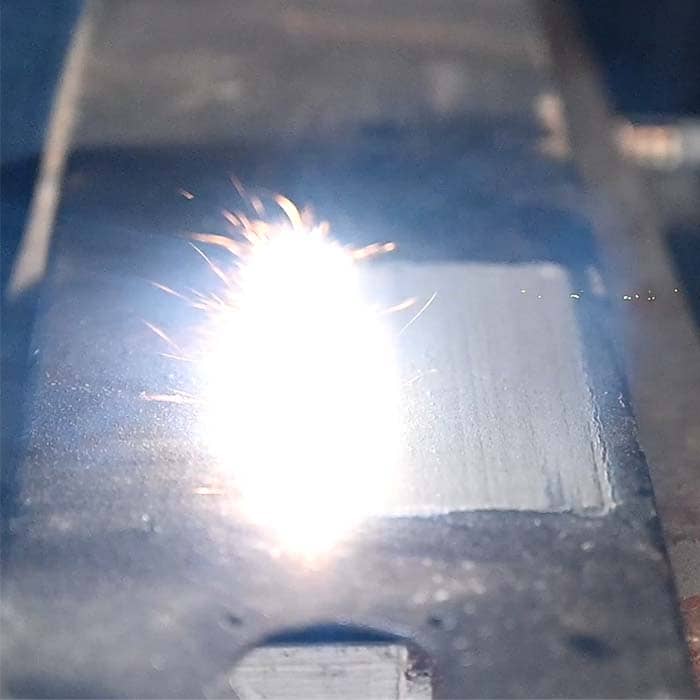
Laser paint removal is a precision surface treatment process that uses concentrated laser energy to strip paint, coatings, and other contaminants from surfaces without physical contact or chemical solvents. The technology works through a process called laser ablation, where high-intensity pulsed laser beams cause paint molecules to rapidly heat and vaporize, leaving the underlying substrate completely intact.
Unlike traditional methods such as sandblasting or chemical strippers, laser paint removal offers unmatched control, produces minimal waste, and eliminates exposure to hazardous materials. The technology can be applied to virtually any substrate including metals (steel, aluminum, copper), plastics, composites, stone, concrete, and wood.
Industries that benefit most from laser paint removal include automotive manufacturing, aerospace MRO (maintenance, repair, and overhaul), industrial production, historic restoration, and any application where surface integrity and environmental compliance are critical.
Laser Paint Removal vs. Traditional Methods: Which Is Right for You?
In Brief: Laser beats sandblasting on precision and waste (90% less). It beats chemical strippers on safety and speed (minutes vs. hours). It beats mechanical grinding on surface protection and consistency. Choose laser when quality, safety, or compliance matter.
Before investing in any paint removal solution, you need to understand how laser technology compares to conventional methods. The following comparisons will help you make an informed decision based on your specific requirements.
Laser vs. Sandblasting
Sandblasting uses abrasive particles propelled at high velocity to physically scrape paint from surfaces. While effective for large-scale rough work, it has significant limitations for precision applications.
Factor | Laser Paint Removal | Sandblasting |
Surface Damage | None – non-contact process | Risk of pitting and erosion |
Precision | Micron-level accuracy | Low – affects surrounding areas |
Waste Generated | Minimal (vaporized particles) | Large volumes of contaminated media |
Speed | Up to 15x faster for detail work | Fast for large rough surfaces |
Environmental Impact | Eco-friendly, no media disposal | Significant waste disposal costs |
Substrate Types | All materials including delicate | Limited to robust materials |
Automation Potential | Fully automatable | Difficult to automate precisely |
Bottom Line: Choose laser for precision work, delicate substrates, or when environmental compliance matters. Choose sandblasting only for large-scale rough surface preparation where precision isn’t critical.
Laser vs. Chemical Strippers
Chemical paint strippers use solvents to dissolve paint bonds, requiring application, dwell time, and physical removal. They face increasing regulatory pressure due to health and environmental concerns.
Factor | Laser Paint Removal | Chemical Strippers |
Chemicals Required | None | Toxic solvents (methylene chloride) |
Health Risks | Minimal with proper PPE | High – respiratory, skin hazards |
Processing Time | Minutes | Hours (requires dwell time) |
Residue | None | May leave residue |
Disposal Requirements | Simple HEPA filtration | Hazardous waste disposal |
Surface Damage Risk | None | Can damage some substrates |
Regulatory Compliance | Meets EPA/OSHA standards | Increasingly restricted |
Bottom Line: Laser is superior for nearly all applications. Chemical strippers are becoming obsolete due to health concerns and regulations.
Laser vs. Mechanical Grinding
Mechanical grinding uses abrasive wheels or discs to physically remove paint through friction. It’s labor-intensive and poses significant risks to both operators and substrates.
Factor | Laser Paint Removal | Mechanical Grinding |
Contact Type | Non-contact | Direct physical contact |
Substrate Protection | Complete | High risk of gouging |
Dust Generation | Captured by extraction | Significant airborne particles |
Noise Level | Low (< 70 dB) | High (> 90 dB) |
Operator Fatigue | Minimal | High physical labor |
Consistency | Perfectly uniform | Varies with operator skill |
Quick Decision Framework
- Choose Laser if: You need precision, work with delicate or valuable substrates, require environmental compliance, want automation, or prioritize worker safety.
- Choose Sandblasting if: Processing large rough surfaces where precision doesn’t matter and you can manage waste disposal.
- Choose Chemical Strippers if: You have complex geometries inaccessible to laser (rarely the best option today).
- Avoid Mechanical Grinding: For any application where surface quality, safety, or consistency matters.
How Does Laser Paint Removal Work?
In Brief: Pulsed laser energy is absorbed by paint, causing instant vaporization (sublimation) at temperatures reached in microseconds. The substrate reflects most energy and remains undamaged. Vaporized particles are captured by HEPA extraction.
Understanding the science behind laser paint removal helps you appreciate why it delivers superior results and how to optimize the process for your specific application.
The Laser Ablation Process: Step by Step
Laser paint removal works through a process called laser ablation. Here’s what happens in milliseconds when the laser contacts a painted surface:
- Step 1 – Energy Delivery: A pulsed fiber laser directs concentrated light energy at the painted surface in short, intense pulses that maximize energy density while minimizing heat transfer to the substrate.
- Step 2 – Absorption: The paint coating absorbs the laser energy. Different paint types absorb at different rates, which is why parameters must be calibrated for each application.
- Step 3 – Rapid Heating: Absorbed energy causes paint temperature to rise extremely rapidly—reaching the ablation threshold in microseconds.
- Step 4 – Sublimation: At the ablation threshold, molecular bonds break and paint transitions directly from solid to gas (sublimation), leaving no residue.
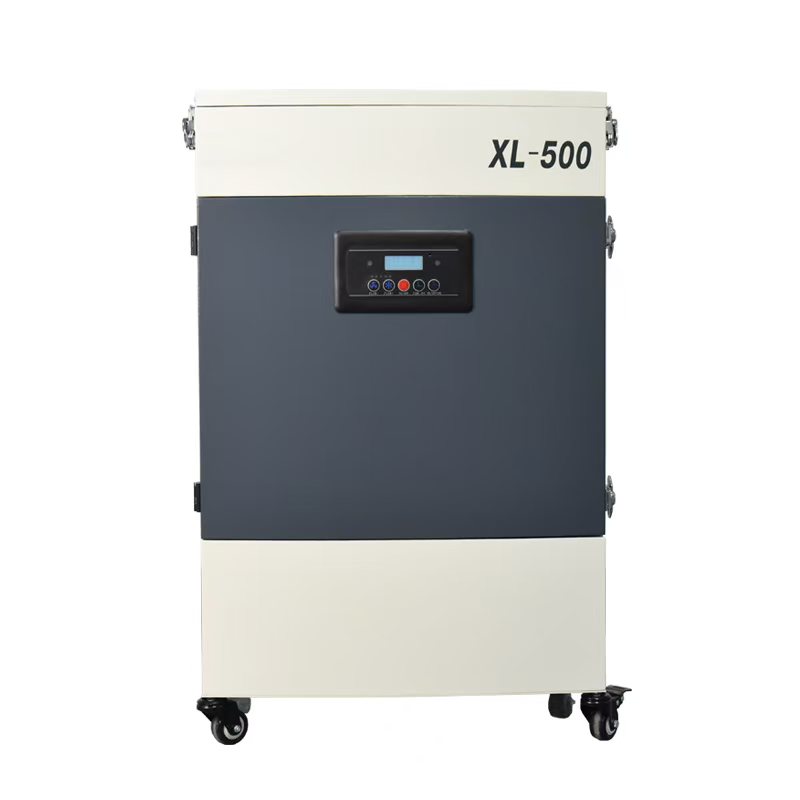
- Step 5 – Extraction: Vaporized particles and gases are immediately captured by an integrated fume extraction system with HEPA filtration.
Why the Substrate Stays Undamaged
The key to laser paint removal’s precision lies in selective absorption. Every material has a unique absorption coefficient for specific laser wavelengths. Paint coatings typically absorb far more laser energy than metals, plastics, or other common substrates.
Modern laser systems can be precisely calibrated to deliver just enough energy to ablate the coating while the substrate reflects or conducts away the minimal energy it absorbs. Operators can adjust power density, pulse duration, repetition rate, and scan speed to optimize results for any coating-substrate combination.
Industry Applications: Is Laser Paint Removal Right for Your Business?
In Brief: Laser paint removal delivers proven ROI across automotive (70% faster processing), aerospace (aircraft stripping in days vs. weeks), manufacturing (80% faster mold cleaning), restoration (zero damage to historic surfaces), and lead paint removal (100% EPA compliance).
Automotive & EV Manufacturing
Automotive manufacturers use laser paint removal for selective coating removal on body panels, weld preparation, and creating illuminated switch panels. Electric vehicle battery production relies on laser cleaning for electrode preparation.
Typical Results: 70% reduction in processing time vs. masking, zero chemical waste, perfect repeatability across millions of parts.
Aerospace & Aviation MRO
Aircraft require complete paint removal every 5-7 years for inspection and repainting. Traditional methods risk damaging thin aluminum skins and composite structures. Laser systems strip entire aircraft in days rather than weeks with zero surface damage.
Typical Results: Aircraft stripping reduced from 2 weeks to 3-4 days, 95% less hazardous waste, eliminated panel damage.
Industrial Manufacturing
Manufacturing facilities use laser paint removal for mold cleaning, weld preparation, surface activation before bonding, and removing coatings for quality inspection. The technology integrates seamlessly into automated production lines.
Typical Results: Mold cleaning time reduced 80%, eliminated bottlenecks, consistent quality without operator variability.
Historic Restoration & Conservation
Museums, historic buildings, and restoration specialists value laser cleaning for removing decades of paint and pollution from stone, metal, and wood without damage to original surfaces. The precision allows selective removal while preserving original finishes.
Typical Results: Surfaces restored to original condition, historical integrity preserved, strict conservation standards met.
Lead Paint Removal & Regulatory Compliance
Removing lead paint from pre-1978 structures is heavily regulated. Laser ablation captures all particles in HEPA filtration rather than creating airborne contamination, dramatically simplifying EPA RRP (Renovation, Repair, and Painting) compliance.
Typical Results: 100% EPA compliance, zero airborne lead contamination, reduced liability and insurance costs.
Laser Paint Removal Equipment: How to Choose the Right System
In Brief: Match power to application: 100-200W for thin coatings and detail work, 300-500W for general industrial use, 1000W+ for heavy-duty and high-volume. Handheld systems ($15K-$80K) offer flexibility; automated systems ($100K-$500K+) deliver consistency and throughput.
Power Levels Explained
Laser power directly affects removal speed and capability. Here’s how to match power to your application:
Power Range | Best Applications | Typical Use Cases |
100-200W | Thin coatings, detail work | Small parts, electronics, fine restoration |
300-500W | Medium industrial | Automotive parts, mold cleaning, weld prep |
1000-2000W | Heavy industrial, thick coatings | Aerospace, shipbuilding, large structures |
2000W+ | Maximum throughput | Aircraft stripping, continuous production |
Rule of Thumb: Start with the minimum power that meets your speed requirements. Higher power increases cost and requires more robust safety measures.
Handheld vs. Automated Systems
- Handheld Systems: Best for variable geometry, maintenance, restoration, and lower volumes. Maximum flexibility. Investment: $15,000-$80,000.
- Automated/Robotic Systems: Best for high-volume production and consistent part geometry. Perfect repeatability. Investment: $100,000-$500,000+.
Key Features Checklist
When evaluating laser paint removal systems, ensure these critical features are included:
- Adjustable power and pulse parameters for different coating types
- Variable scan patterns (linear, circular, rectangular)
- Integrated fume extraction with HEPA filtration
- Intuitive software interface with preset configurations
- IP-rated enclosure for industrial environments
- Safety interlocks and emergency stop
- Service and support availability in your region
Top Laser Paint Removal Brands Compared (2025)
Brand | Power Range | Price Range | Best For |
Laserax | 200W-3000W | $$$ | Aerospace, high-volume automotive |
P-Laser | 100W-2000W | $$ | General industrial, shipbuilding |
KEYENCE | 50W-500W | $$$$ | Precision marking, electronics |
Allied Scientific Pro | 100W-2000W | $$ | Restoration, conservation |
OMTech | 100W-300W | $ | Entry-level, small business |
Cost Analysis: Laser Paint Removal ROI
In Brief: Despite higher upfront costs ($8K-$500K), laser systems typically achieve ROI within 18-24 months through eliminated consumables, reduced waste disposal, and 50-70% faster processing. 5-year TCO is often 50% lower than sandblasting or chemical methods.
Equipment Purchase Costs (2025 Pricing)
System Type | Power Range | Price Range (USD) |
Entry-level handheld | 100-200W | $8,000 – $20,000 |
Professional handheld | 200-500W | $20,000 – $60,000 |
Industrial handheld | 500-1000W | $50,000 – $100,000 |
Automated workstation | 500-2000W | $100,000 – $300,000 |
Robotic cell system | 1000W+ | $200,000 – $500,000+ |
5-Year Total Cost of Ownership Comparison
Based on processing 10,000 square feet of painted surface annually:
Cost Category | Laser System | Sandblasting | Chemical Stripping |
Equipment/Setup | $50,000 | $15,000 | $5,000 |
Consumables (5 years) | $500 | $45,000 | $60,000 |
Waste Disposal (5 years) | $2,000 | $25,000 | $40,000 |
Labor (5 years) | $30,000 | $75,000 | $90,000 |
Maintenance (5 years) | $5,000 | $15,000 | $3,000 |
5-Year Total | $87,500 | $175,000 | $198,000 |
Cost per Sq Ft | $1.75 | $3.50 | $3.96 |
Key Insight: Laser systems typically achieve ROI within 18-24 months through eliminated consumables, reduced waste disposal, and faster processing speeds.
5 Costly Mistakes to Avoid When Choosing Laser Paint Removal
In Brief: The most expensive mistakes: buying underpowered equipment, skipping fume extraction, inadequate operator training, ignoring automation potential, and focusing on purchase price instead of total cost of ownership.
- Buying Underpowered Equipment: Choosing the cheapest option often means inadequate power for your coating thickness, resulting in slow processing and frustration. Always test samples before purchasing.
- Ignoring Fume Extraction: Laser ablation vaporizes coatings into particles that must be captured. Skimping on extraction creates health hazards and inconsistent results.
- Underestimating Training: Operators need proper training to optimize parameters, maintain safety, and achieve consistent results. Budget for comprehensive training.
- Overlooking Automation Potential: Many buyers start with handheld systems when their volume would benefit from automation. Plan for future needs.
- Focusing Only on Purchase Price: Operating costs and productivity gains matter far more than initial cost over a 5-year horizon. Calculate total cost of ownership.
Safety Requirements and Regulatory Compliance
In Brief: Laser paint removal systems are Class 4 lasers requiring safety eyewear (OD 5+), proper ventilation with HEPA extraction, controlled access areas, and trained operators. Must comply with OSHA 29 CFR 1926.102, ANSI Z136.1, and EPA RRP rules for lead paint.
Required Personal Protective Equipment
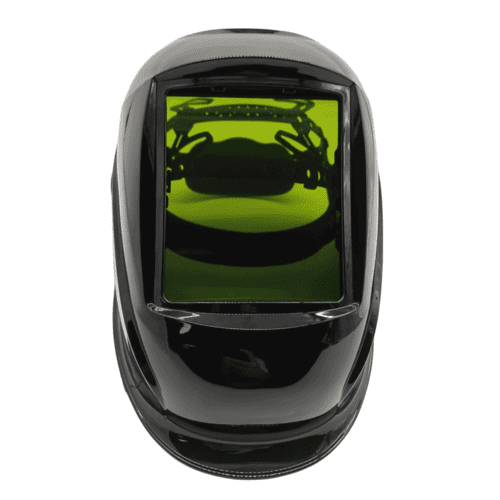
- Laser safety eyewear matched to wavelength (OD 5+ for 1064nm fiber lasers)
- Long-sleeved clothing and gloves for skin protection
- Respiratory protection when extraction is insufficient
- Hearing protection for high-power systems (usually optional)
Facility Requirements
- Dedicated laser safety area with controlled access
- Proper ventilation and fume extraction with HEPA filtration
- Warning signage and indicator lights during operation
- Emergency stop buttons at all operating positions
- Fire suppression equipment
Regulatory Standards
- OSHA 29 CFR 1926.102 – Eye and face protection
- ANSI Z136.1 – Safe use of lasers in industrial settings
- EPA RRP Rule – Lead paint removal requirements
- Local air quality regulations for fume extraction

Real-World Results: Laser Paint Removal Case Studies
In Brief: Documented results from real implementations: automotive manufacturer achieved 14-month ROI with 70% faster processing; aerospace facility reduced aircraft stripping from 2 weeks to 3-4 days; historic building achieved 100% EPA compliance with zero damage.
Case Study: Automotive Parts Manufacturer
Challenge:
A tier-1 automotive supplier needed to remove e-coating from specific weld zones on 50,000 parts monthly. Their chemical stripping process required 2-hour dwell times and $8,000 monthly in hazardous waste disposal.
Solution:
Implementation of a 500W fiber laser system integrated into production line with robotic handling.
Results:
- Processing time: 2+ hours reduced to 45 seconds per part
- Chemical waste disposal: $96,000/year reduced to $0
- Scrap rate reduced 60%
- ROI achieved in 14 months
Case Study: Aerospace MRO Facility
Challenge:
An aircraft maintenance facility required full paint removal from commercial aircraft every 6-8 years. Chemical stripping took 10-14 days and generated 2,000+ pounds of hazardous waste per aircraft.
Solution:
Deployment of multiple 2000W automated laser stripping systems with gantry positioning.
Results:
- Aircraft stripping time: 10-14 days reduced to 3-4 days
- Hazardous waste reduced 95%
- Zero substrate damage (previously $50,000+ in panel replacements)
- Hangar capacity effectively doubled
Case Study: Historic Building Restoration
Challenge:
A landmark 1890s building required removal of 12 layers of lead-based paint from ornate stone facades while preserving delicate carved details. Chemical methods risked stone damage; sandblasting would destroy features.
Solution:
Handheld 200W laser systems operated by trained restoration specialists.
Results:
- 100% lead paint removed with full EPA compliance
- Original stone carvings preserved without damage
- Project completed 40% faster than chemical removal quote
- Building received historic preservation certification
Frequently Asked Questions
Laser paint removal uses high-intensity pulsed laser beams to vaporize paint from surfaces without contact or chemicals. The coating absorbs laser energy and instantly transitions from solid to gas (ablation), leaving substrates undamaged.
Entry-level handheld units (100-200W): $8,000-$20,000. Professional systems (200-500W): $20,000-$60,000. Industrial and automated systems: $50,000-$500,000+. Rental options available for short-term projects.
For precision work, laser is up to 15x faster. For large rough surfaces, speeds are comparable, but laser eliminates setup, cleanup, and waste disposal time.
Metals (steel, aluminum, copper, brass), plastics, composites, stone, concrete, brick, and wood. Metal surfaces yield the fastest and most consistent results.
Yes, with proper protocols. It's safer than chemical stripping (no toxic fumes) and sandblasting (no projectiles). Requires laser safety eyewear, training, and fume extraction.
Yes. No chemicals, no secondary waste like blast media, minimal electricity consumption. Vaporized particles captured by HEPA filtration. One of the most eco-friendly methods available.
Yes. Parameters can remove single layers selectively or all layers to bare substrate. Valuable for restoration where original finishes must be preserved.
100-200W for thin coatings and detail work. 300-500W for most industrial applications. 1000W+ for thick coatings, large areas, or maximum throughput. Always test samples first.
Yes. Industrial systems integrate with robotic arms, gantries, and conveyors for fully automated operation. Common in automotive, aerospace, and high-volume production.
Yes. Effectively removes rust, oxide layers, mill scale, and corrosion. Many users combine paint and rust removal in a single process.
Quality fiber lasers: 60,000-100,000 hours (20+ years of typical use). Minimal maintenance required, no consumable parts needing regular replacement.
Yes, increasingly the preferred method. Captures particles in HEPA filtration rather than creating airborne contamination. Simplifies EPA RRP compliance and reduces health risks.
Next Steps: Find the Right Solution for Your Application
Laser paint removal delivers transformative benefits for operations requiring precision, safety, and environmental responsibility. Solutions now exist for virtually every application and budget level.
To determine the optimal solution for your needs:
- Define your coating types, thicknesses, and substrate materials
- Estimate processing volume (square feet per day/week/month)
- Decide between handheld flexibility or automated consistency
- Request sample processing from vendors to verify results
- Calculate total cost of ownership, not just purchase price
Ready to See Laser Paint Removal in Action?
Get a Free Consultation and Sample Processing
Laser Cleaning Cost Per Hour: What We’ve Learned from 500+ Projects DC
ost Per Hour: What We’ve Learned from 50 ost Per Hour: What We’ve Learned from 50 Laser Cleaning Cost Per Hour: What We’ve Learned from 500+ Projects DC Table of Contents Quick answer: Hiring a service:$100 to $350 per hour Operating your own equipment:$34 to $60 per hour But here’s what most articles won’t tell […]
Precision Laser Cleaning
Precision Laser Cleaning Table of Contents What Is Precision Laser Cleaning? If you’ve ever struggled with rust removal, paint stripping, or surface preparation, you know how frustrating traditional methods can be. Sandblasting kicks up clouds of dust. Chemical strippers create hazardous waste. And manual scraping? That takes forever. Precision laser cleaning offers a different approach. […]
Laser Wood Stain Remover: Does It Really Work? A Complete Guide with Real Results
Laser Wood Stain Remover: Does It Really Work? A Complete Guide with Real Results Table of Contents Last Updated: January 2026 Discover how laser technology safely removes paint, varnish, and stains from wood without chemicals or damage. See real before/after results and find out if it’s right for your project. Show Image A 10-year-old oak […]
Laser Stain Removal: Complete Guide to Cleaning Wood, Metal & Stone [2026]
Laser Stain Removal: Complete Guide to Cleaning Wood, Metal & Stone [2026] Table of Contents Quick Summary: Laser stain removal is a chemical-free cleaning technology that uses focused laser beams to remove rust, paint, and contaminants from surfaces without damage. It achieves 95%+ removal rates, works on wood, metal, and stone, and costs $5,000-$50,000 for equipment […]
What Is Laser Cleaning?
What Is Laser Cleaning? Table of Contents Laser cleaning is a process that uses pulsed laser light to strip rust, paint, oil, and other unwanted materials from surfaces—without chemicals, without abrasives, and without damaging what’s underneath. The technology has been around since the 1990s, but costs have dropped sharply in the past decade. A system […]
Laser Cleaning Business: Real Income Data from 47 Business Owners (2026 Guide)
Laser Cleaning Business: Real Income Data from 47 Business Owners (2026 Guide) Table of Contents If you’re researching how to start a laser cleaning business, here’s what 47 real business owners told us: Average first-year revenue:$127,000 (range: $48K to $289K) Laser cleaning business cost:$31,000 to $156,000 (equipment + everything else) Hourly rates:$85 to $300 depending […]