
Pulse Laser Cleaning Machine | 20W-3000W Industrial Models
Precision Rust & Paint Removal Guide (2026)
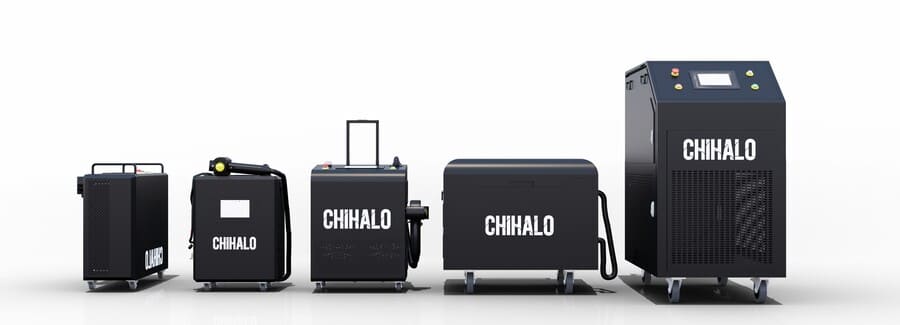
Table of Contents
What is a Pulse Laser Cleaning Machine?
A Pulse Laser Cleaning Machine uses short bursts of high-energy light (Gaussian beam) to remove contaminants like rust, paint, oil, and oxide layers. Unlike Continuous Wave (CW) lasers, pulse lasers operate without generating excessive heat, making them the only solution for “non-destructive cleaning.” They are essential for preserving high-value substrates such as injection molds, historical artifacts, and aerospace components.
Chihalo Laser manufactures professional-grade pulse laser cleaners from 20W to 3000W, designed for industrial paint removal, pre-weld surface preparation, and mold cleaning applications. Our systems combine German laser source technology with user-friendly controls for maximum productivity and minimal operational costs.
Chihalo Pulse Laser Cleaning Machine
MINI Laser Cleaner
MINI Laser Cleaner for Starter, Power from 20W to 50W. It with handheld cleaning head, Pirce from USD2500 to USD3500.
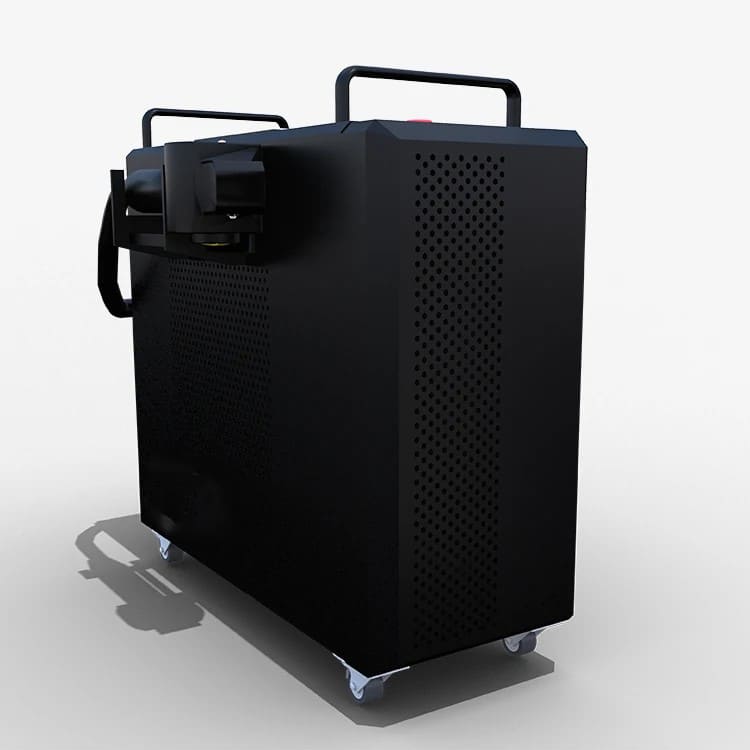
MOPA Laser Cleaner
Air-cooled MOPA Laser Power from 100W to 500W. Peak power more than 8KW. Price from USD4500 to USD18000.
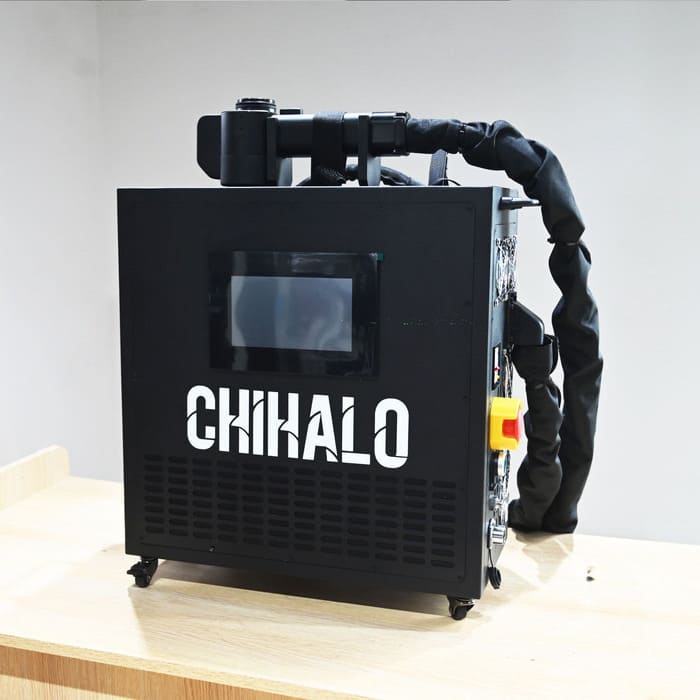
Pulse Laser Cleaner
High Power 1000W – 3000W Pulse Laser cleaning machine. Adopts handheld cleaning head and price from USD30000.
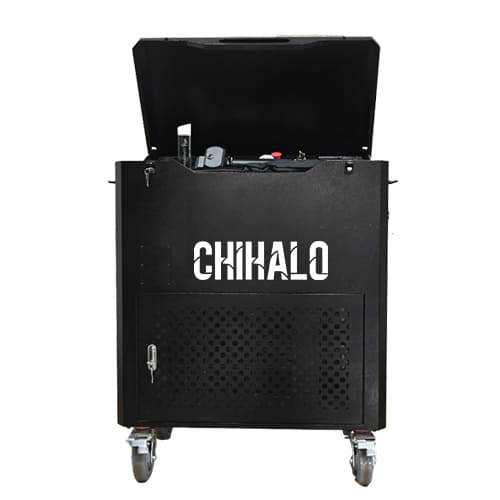
| Model | CHL-M100 | CHL-M200 | CHL-M300 | CHL-M500 |
|---|---|---|---|---|
| Wavelength | 1064nm | 1064nm | 1064nm | 1064nm |
| Laser Power | 100W | 200W | 300W | 500W |
| Frequency Range | 1~4000kHz | 1~4000kHz | 1~4000kHz | 1~4000kHz |
| Pulse Range | 2~350ns | 30~500ns | 30~500ns | 30~500ns |
| Pulse Energy | 1.5mJ | 1.5mJ/15mJ | 1.5mJ/15mJ | 1.5mJ/15mJ/50mJ |
| Scaning Length | 0-200mm | 0-200mm | 0-200mm | 0-200mm |
| Fiber Cable | 5m | 5m-10m | 5m-10m | 5m-10m |
| Beam Quality | ≤1.6 | ≤1.6 | ≤1.6 | ≤1.6 |
| Operation Mode | Pulse & Continuous | Pulse & Continuous | Pulse & Continuous | Pulse & Continuous |
| Machine Weight | 25KG | 25KG | 25KG | 25KG |
| Input Power | 110~220V, 50~60Hz | 110~220V, 50~60Hz | 110~220V, 50~60Hz | 110~220V, 50~60Hz |
| Work Temperature | 0 ~40℃ | 0 ~40℃ | 0 ~40℃ | 0 ~40℃ |
| Storage Temperature | -10 ~60℃ | -10 ~60℃ | -10 ~60℃ | -10 ~60℃ |
| Cooling | Air Cooling | Air Cooling | Air Cooling | Air Cooling |
| Feature | Pulse Laser Cleaner (Precision & Safe) | CW Laser Cleaner (Speed & Rough) |
| Best Applications | Delicate surfaces, thin materials (<3mm), molds, aerospace components. | Heavy rust, thick coatings (>0.5mm), structural steel, marine vessels. |
| Heat Impact (HAZ) | Minimal (<0.1mm). No warping on thin sheets. Ideal for non-destructive cleaning. | Higher heat transfer. May cause discoloration or warping on thin metals. |
| Cleaning Speed | Moderate: 1-5 m²/hour (Depends on contamination level). | Fast: 5-15 m²/hour (Ideal for large surface areas). |
| Substrate Compatibility | All materials: Aluminum, titanium, copper, composites, ceramics, glass. | Primarily Ferrous metals: Steel, iron, thick stainless steel. |
| Purchase Price | $4,500 – $35,000 (Complete systems). | $4,000 – $16,000 (For equivalent capacity). |
| Operating Cost | Low: $2-5/hour. Lower energy use (200-500W typical). | Medium: $8-15/hour. Higher energy use (1000-3000W typical). |
| Ideal Industries | Aerospace, Electronics, Historical Restoration, Mold Cleaning, Medical. | Shipbuilding, Heavy Machinery, Construction, Pipelines, Bridges. |
| Verict: Choose This If… | You need precision, work with thin parts (<5mm), or must avoid damaging the base material (molds/antiques). | You need maximum speed on heavy rust, thick steel (>1mm), and handle large, rough surfaces daily. |
2026 Pulse Laser Cleaning Machine Price Guide
The cost of a pulse laser cleaning machine depends on the laser power (Wattage) and the brand of the laser source (JPT, Raycus, IPG). Here is the estimated market price range for 2026:
- 20W-50W MINI Laser Cleaner: $2,500 – $3,500
100W-200W Entry-Level (Backpack/Portable): $4,500 – $9,000
Best for: Small parts, occasional use, graffiti removal.
300W – 500W Industrial Standard: $12,000 – $18,000
Best for: Mold cleaning, auto parts, daily industrial use.
1000W+ High Power Systems: $35,000+
Best for: High-speed automated production lines.
Factors Affecting Pulse Industries Laser Cost
You can refer to this page about “Fiber Laser Cleaning Machine Price Guide 2025“.
FIFTH
Top 3 Applications for Chihalo Pulse Lasers
1. Mold Cleaning (Injection & Rubber Molds)
In the manufacturing industry, downtime is costly. Our pulse laser cleaning machines remove release agents and sulfide residues without damaging the mold’s texture or tolerances.
Suitable for: Tire molds, shoe sole molds, food processing molds.
2. Wood Furniture Restoration
It’s super fast, easy and popular to use laser cleaner to remove stain, paint on wood. No heat, no damage and just turn on the machine then it can save a lot of time.
- Suitable for: Wood furniture, wood door, wood construction.
3. Historical Relics Restoration
Trusted by restoration experts, pulse lasers can adjust energy frequency to remove soot and corrosion from stone, bronze, and copper artifacts without erasing the historical patina.
Choosing the Right Pulse Industries Laser Cleaning Machine
| Feature | 200W (Entry Precision) | 300W (Best Value Workhorse) | 500W (Industrial Powerhouse) |
| Best For | Small Parts & Precision: Electronics, jewelry, antique restoration, lab research. | General Repair & Molds: Auto restoration, rubber molds, mobile cleaning services. | Heavy Industry: Shipyards, mill scale, thick epoxy, large manufacturing lines. |
| Cleaning Efficiency | 0.5 – 2 m²/hr. Good for spot cleaning and detail work. | 1 – 3 m²/hr. Balanced speed for workshops and contractors. | 2 – 5 m²/hr. High throughput for continuous production. |
| Max Coating Removal | Light coatings: < 0.3mm (Rust/Paint under 100 microns). | Medium coatings: < 0.6mm (Rust/Paint up to 300 microns). | Thick coatings: < 1.2mm (Heavy rust, scale, industrial epoxy). |
| Budget (2025 Est.) | $7,000 – $9,000 | $9,000 – $12,000 | $15,000 – $18,000 |
| Operating Cost | Low: ~$150-250/mo. Ideal for tight budgets. | Medium: ~$200-350/mo. Fast ROI (6-12 months). | High: ~$300-500/mo. Fastest payback for volume jobs. |
| Form Factor (New) | Highly Portable: Often backpack or suitcase style. Easy to carry. | Mobile: Luggage/Trolley style. Fits in a service van. | Stationary/Cabinet: Requires dedicated floor space & ventilation. |
| Ideal User | Hobbyists, Labs, Jewelry Shops, Small Studios. | Contractors, Auto Shops, Mold Factories. | Factories, Shipyards, Military Depots. |
| Verdict | Choose for delicate, non-urgent tasks on small items. | The “Sweet Spot” for 80% of businesses needing versatility. | Choose for heavy-duty, all-day cleaning on large steel structures. |
You can refer to this blog about: How to Choose a Laser Cleaning Machine?
How to Select the Best Pulse Laser Cleaning Machine for Your Needs
Choosing the right pulse laser cleaning machine starts with honest assessment of your needs. Light restoration work? A lower power system handles it beautifully and costs less. Heavy rust removal and production cleaning? You’ll want 500w pulse laser cleaning machine capability from day one.
I always ask customers about their most challenging application first. If the pulse laser for sale system can handle your toughest job, everything else becomes easy. Handheld laser cleaner models give you flexibility for varied work. Stationary laser cleaner systems with automation excel at repetitive production tasks.
Power, Brand, and After-Sales Support Considerations
Pulse laser price reflects not just the machine, but the entire support ecosystem. When comparing pulse laser cleaning machine options, factor in training quality, technical support responsiveness, and parts availability. I’ve seen customers choose cheaper alternatives only to struggle with poor support.
Power selection dramatically affects pulse laser cost and capability. The 500w laser cleaner handles the widest application range, but might be overkill for specialized needs. Consider your growth plans too – upgrading later costs more than buying the right system initially. Pulse laser cleaning machine offers excellent trade-in programs for existing customers.
FAQ
Pulse laser cleaning machines range from $3,000 for entry-level 20W units to $35,000+ for industrial 1000W systems. Air-cooled pulse laser cleaners (100-300W) typically cost $5,800-$15,000. Water-cooled high-power systems (500W+) range $15,000-$35,000. Operating costs average $2-5 per m² cleaned, compared to $50-100 for traditional sandblasting.
Choose a pulse laser cleaning machine if you need precision cleaning on delicate surfaces, thin materials under 5mm, or applications where substrate damage is unacceptable. Pulse lasers use nanosecond bursts (100-200ns) that minimize heat transfer to the base material, making them ideal for aerospace aluminum panels, precision molds, electronics, and historical restoration work.
Choose a continuous wave (CW) laser if your priority is maximum cleaning speed on heavy rust or thick industrial coatings over 1mm. CW lasers deliver constant beam output at 1000-3000W, achieving cleaning speeds of 5-15 m²/hour compared to pulse systems' 1-5 m²/hour. However, CW lasers generate more substrate heat and may cause discoloration on stainless steel or warping on thin aluminum.
The price difference is significant: pulse laser cleaning machines cost 3-4 times more than equivalent CW systems. A 300W pulse system runs $12,000-18,000 while a 1500W CW system costs $8,000-15,000. However, pulse systems prevent costly substrate damage and rework expenses, often justifying the higher initial investment for high-value applications.
For paint removal specifically, pulse laser cleaning machines are more effective due to paint's strong adhesion. Using CW lasers on paint requires prolonged exposure that can damage the substrate underneath. Pulse systems use oscillation to break paint bonds without excessive heat buildup.
Pulse laser cleaning machines have remarkably low operating costs compared to traditional methods. Daily electricity consumption for a 300W pulse system running 8 hours costs approximately $2-4 depending on local rates (assuming $0.12/kWh). A 500W pulse laser cleaning machine consuming 800-1000 watts total (including cooling) costs $3-6 per day for the same usage.
There are no consumables required—no sandblasting media ($200-500/month), no chemical strippers ($150-400/month), no grinding wheels or wire brushes. This consumable-free operation provides the largest long-term savings. One business reported saving $3,500/month in consumable costs alone after switching to pulse laser cleaning.
Maintenance costs are minimal. Annual maintenance for pulse laser cleaning machines typically runs $800-1,200, primarily for protective lens replacement ($150-300 each, replaced 2-3 times yearly) and occasional filter cleaning. The fiber laser source itself is maintenance-free with no alignment required, unlike CO2 lasers. Air-cooled pulse systems eliminate water chiller maintenance entirely.
Labor costs decrease significantly because pulse laser cleaning requires less skill than manual methods. An operator can achieve consistent results after just 4-8 hours training, while sandblasting quality varies heavily with operator experience. One automotive shop reported reducing cleaning time per part from 3 hours manual sanding to 45 minutes with a 300W pulse laser cleaning machine.
Total cost per square meter cleaned averages $2-5 for pulse systems versus $50-100 for traditional methods including labor, consumables, and disposal. Most businesses calculate payback period of 6-18 months depending on utilization rate.
Yes, with careful supplier selection. Look for manufacturers with 5+ years operation, verifiable customer installations, USA/EU service centers, and CE/FDA certifications. Reputable Chinese brands cost 30-50% less than European equivalents: $7,000-12,000 for 300W versus $25,000-35,000.
Key requirements: 1-year full warranty plus 2-year laser source coverage, English documentation, replacement parts within 3-5 days, video training included, and factory testing available. Avoid suppliers offering prices under $8,000 for 300W (quality shortcuts) or lacking technical knowledge.
Pulse laser cleaning machines are Class 4 lasers requiring strict safety protocols but are safer than sandblasting or chemical methods when used correctly. Primary hazard: laser radiation can cause permanent eye damage in under 0.25 seconds—all operators must wear laser safety glasses rated for 1064nm wavelength.
Safety features include emergency stops, interlock sensors, contact-only activation, and warning alarms. Fume extraction required when removing toxic coatings (lead paint, chrome). Unlike sandblasting (creates silica dust) or chemicals (toxic fumes), pulse lasers with proper protection eliminate these hazards entirely.
Yes, but training is relatively short: 4-8 hours for basic proficiency versus weeks for traditional methods. Training covers laser safety (2-3 hours), equipment operation (2-3 hours), and material-specific settings (1-2 hours). Most suppliers include free training.
Critical skills: understanding Class 4 laser hazards, power level selection (rust uses 70-100%, paint 40-70%, molds 30-50%), pulse frequency adjustment (20-80kHz), and recognizing substrate damage signs. Operators achieve consistent results faster than with manual methods—a trained beginner outperforms an experienced sandblaster on precision work.
Daily (5 minutes): inspect protective lens for damage, wipe external surfaces, check cable connections. Weekly: clean protective lens with optical-grade alcohol and cloth. Monthly: clean air filters, test safety interlocks.
Primary consumable: protective lenses cost $150-300 each, replaced every 2-6 months depending on usage. Annual professional service ($500-1,200) includes laser power verification and safety certification. Total annual maintenance: $800-1,500 versus $3,000-6,000 for sandblasting equipment. Fiber laser source needs no alignment or gas refills—truly maintenance-free.
No, when operated correctly. Nanosecond pulses (100-200ns) heat contaminants so fast that underlying metal stays cool. Contaminants absorb 1064nm wavelength and vaporize; clean metal reflects the same wavelength, creating a self-limiting process that stops automatically.
Damage occurs only with incorrect settings: excessive power on thin aluminum (over 60-70%), too-low frequency on delicate surfaces, or prolonged dwell time. Always test on inconspicuous areas first.
Comparison: sandblasting removes 10-50 microns of base material regardless, chemical stripping causes hydrogen embrittlement, grinding creates stress zones. Pulse laser with correct parameters removes zero base material.
Fiber laser source lasts 20,000-50,000 operational hours (6-15 years at 8 hours daily). Other components: scanning heads 8,000-15,000 hours, protective lenses 200-1,000 hours, cooling fans 15,000-30,000 hours.
Overall machine lifespan: 15-20 years with component replacement. Depreciation + maintenance: approximately $2,000 annually for a $15,000 system, or $1/hour across 2,000 annual hours.
Factors extending life: operating at 70-80% rated power (not maximum), clean environments, proper cooling, quality consumables, following maintenance schedules. Technology obsolescence may prompt upgrades before mechanical failure.
Single-mode (Gaussian beam) concentrates energy into an intense center spot with peak power up to 150 megawatts. Best for heavy-duty cleaning: thick paint over 500 microns, heavy rust, mill scale, galvanized coating removal, stone monument cleaning.
Multi-mode (flat-top beam) distributes energy evenly across the spot. Ideal for delicate work: thin rust on precision parts, automotive paint removal, mold cleaning, oxide layers, pre-weld prep on thin materials.
Single-mode cuts through stubborn contamination multi-mode cannot touch, but risks substrate heating on thin materials. Multi-mode costs 10-20% more but reduces damage risk and allows less-experienced operators to succeed.
Yes, with proper technique. Use minimal power (20-40% maximum), high frequency (60-80 kHz), 45-degree angle (never perpendicular), and continuous motion. Pulse energy: 0.1-0.3 mJ for wood safety.
Hardwoods (oak, walnut, maple) tolerate pulse laser cleaning excellently for removing paint, varnish, and weathered layers. Softwoods (pine, cedar) require 30-50% lower power due to lower density. Avoid resinous woods at high power (fire risk).
Veneer limits: over 1mm thick can be cleaned carefully; under 0.5mm risks burn-through. Always test hidden areas first. Advantages over chemical strippers: no toxic fumes, doesn't raise grain, preserves fine details, no hazardous waste.
Yes, pulse laser cleaning machines are considered the best technology for mold maintenance. They remove rubber vulcanization residue, polymer buildup, and release agents 4-5× faster than manual scraping while preserving critical mold surface finish—no scratches or damage.
Use multi-mode (flat-top beam) at 40-60% power with high frequency (60-80 kHz). Minimal substrate heating (under 50°C rise) prevents thermal distortion of hardened tool steel. Cleans complex geometries, cooling channels, and intricate details impossible for manual tools.
ROI example: reduce cleaning time from 8 hours to 2 hours per mold. At $50/hour labor, that's $300 saved per cleaning. For 10 molds monthly, $36,000 annual savings justifies $15,000 equipment cost in 5 months.
Metals: all types including aluminum, stainless steel, carbon steel, titanium, copper, brass, cast iron. Removes rust, paint, oil, oxide layers, mill scale, and coatings without substrate damage.
Non-metals: wood (paint and varnish removal), stone (monument cleaning), ceramics, glass, composites (CFRP-safe), plastics (with low power settings), and concrete.
Material-specific settings critical: aluminum needs 0.2-0.5 mJ pulse energy, stainless steel 0.5-1.5 mJ, titanium requires 30-50% power, wood 0.1-0.3 mJ. Always test first on inconspicuous areas to verify parameters prevent damage.
Speed depends on rust severity and power level:
200W pulse laser: light rust 1.5-2 m²/hour, medium rust 0.5-0.8 m²/hour 300W pulse laser: light rust 2.5-3 m²/hour, medium rust 1-1.5 m²/hour
500W pulse laser: light rust 4-5 m²/hour, medium rust 1.5-2.5 m²/hour, heavy rust 1-1.5 m²/hour
Flash rust (under 0.2mm) cleans fastest. Deep pitting rust (over 3mm) or mill scale requires maximum power at slower speeds. Compare to manual wire brushing (0.5-1 m²/hour) or sandblasting (3-5 m²/hour but with consumables and cleanup).
The main difference is cleaning speed (efficiency). A 200W machine has higher pulse energy, allowing it to clean the same area about 2x faster than a 100W machine. If you have high-volume production needs, we recommend 200W or higher.
No. Unlike sandblasting or chemical cleaning, pulse laser cleaning machines require no media, chemicals, or dry ice. The only "consumable" is electricity and the occasional protective lens for the laser gun.
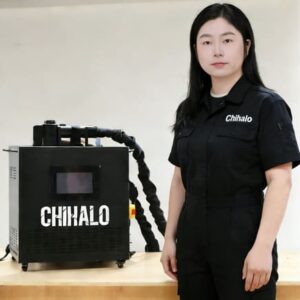
Dawn Huang | Founder of Chihalo Laser | M.Sc. Engineering (HKU)
Hi! I am Dawn. With 10 years of field experience, I specialize in laser cleaning systems—from optical sourcing to automation. I write here to turn complex specs into actionable buying guides.
No. 8 Houcheng Road, Chengdu, China 610500
Call Us : +86 18608325040 We are open from Monday to Friday 00.90 AM - 17.00 PM